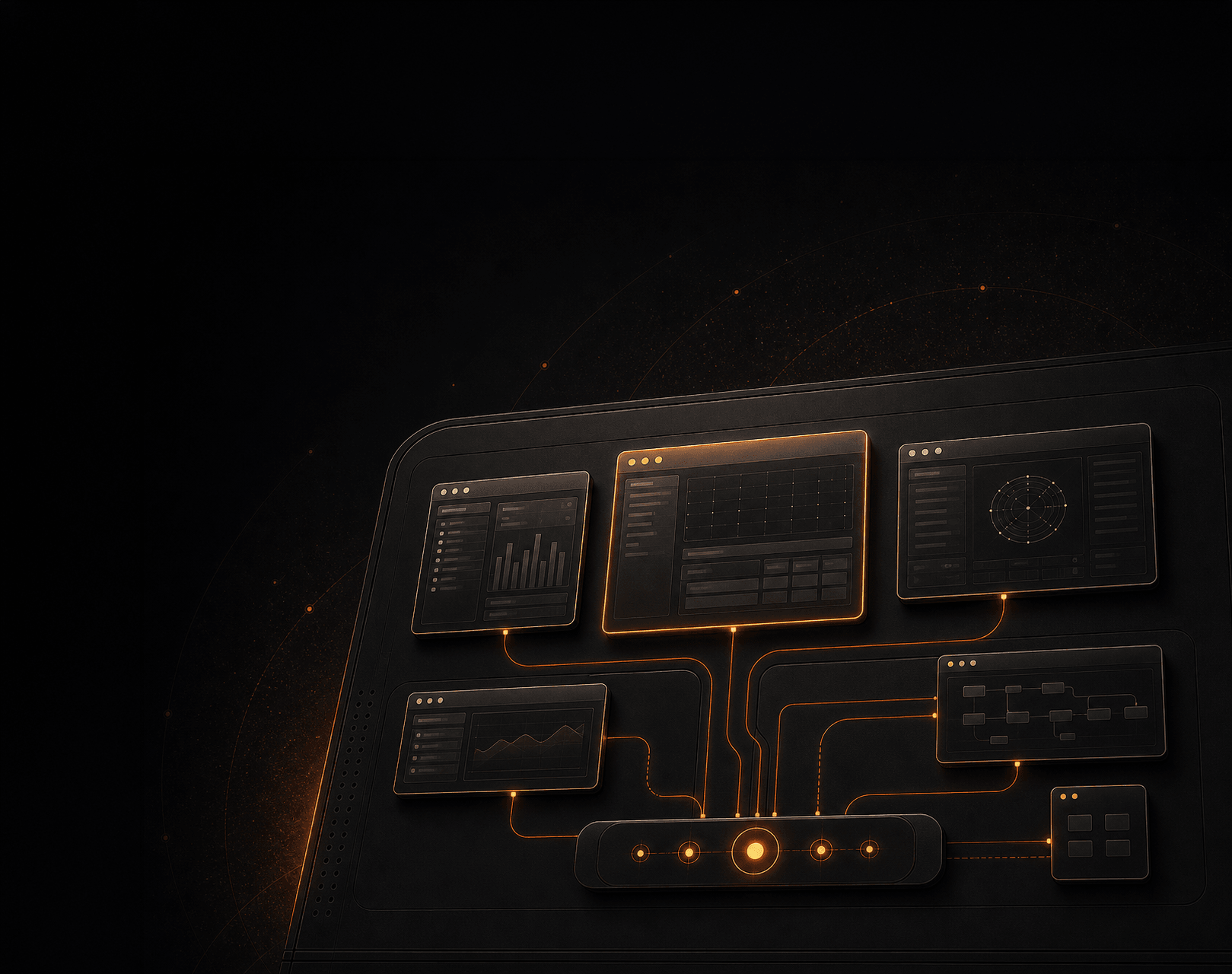
OS Shell
One complete environment to create, automate, and supervise agent work, without scripts, plugin chains, or orchestration frameworks.
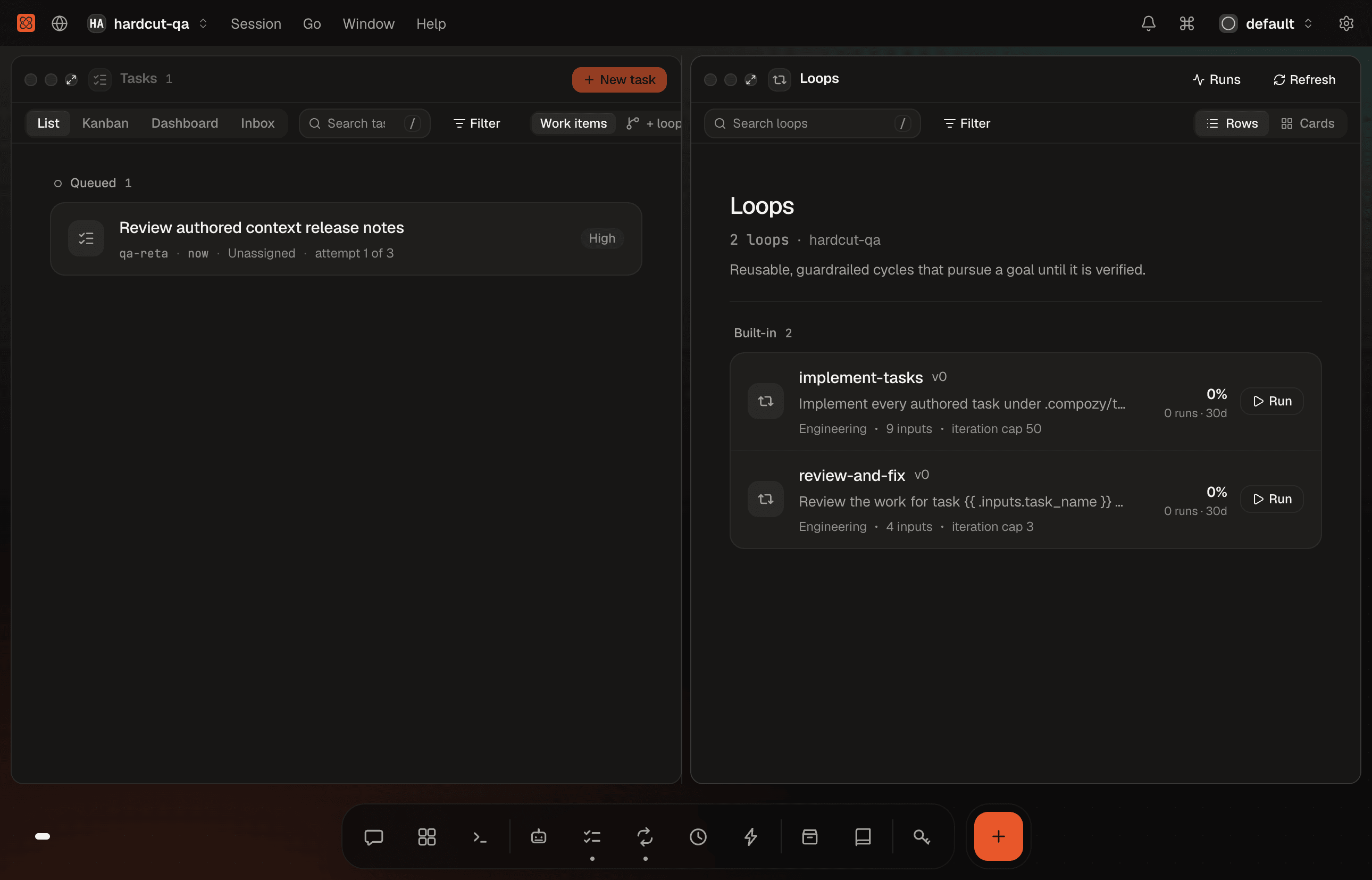
CompozyOS owns the loop. Tasks claim runs atomically through ClaimNextRun, hold a lease they must heartbeat, and release back to the queue if they crash. One queue. Shared between humans and agents. Claim tokens never logged in raw form.
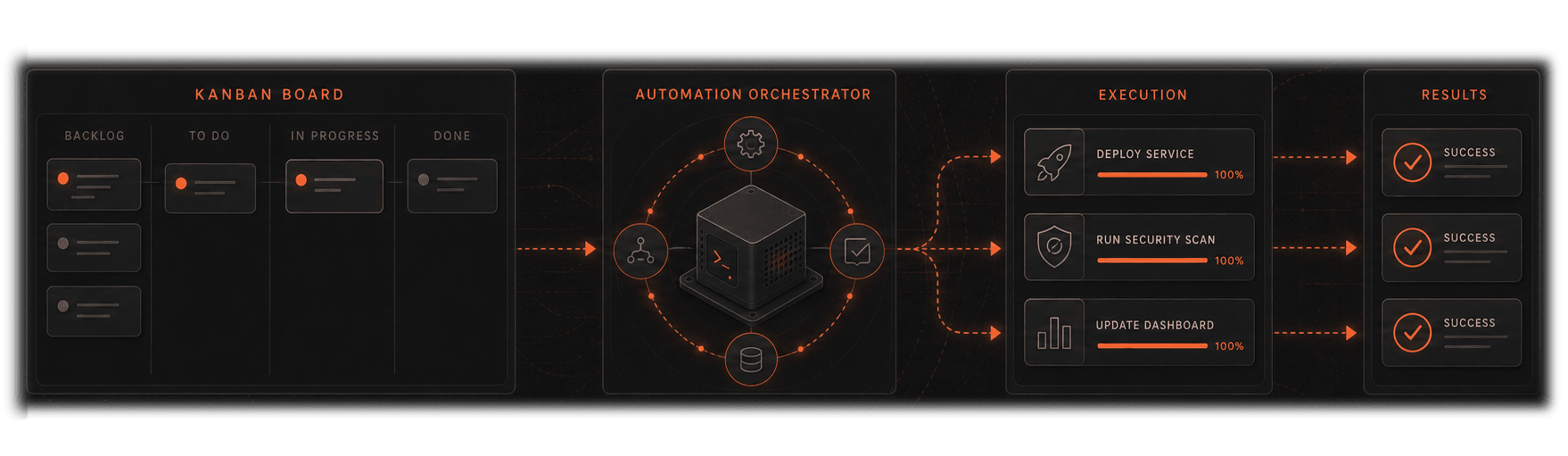
Only the agent holding the claim token can heartbeat or complete a run. Sessions cannot reach into runs they don't own. Tokens are hashed before they touch the event ledger; raw values never leave the daemon.
$ compozy task create$ compozy task list --status queued$ compozy task next --wait # claimed by an idle agent$ compozy task heartbeat <run-id> # held by claim_token$ compozy task complete <run-id>Leases expire on a TTL. Runs re-enter the queue automatically. The next idle agent picks them up.
compozy task create (you) and the coordinator agent (them) write to the same SQLite table. Same primitives, same audit trail.
Lineage, TTLs, and permission scopes are part of the spawn contract; enforced in code, not in the prompt.
Loops, automation, permissions, approvals, and run history are core objects in one runtime, reachable from CLI, HTTP, and UDS. Same primitives for you and for the agents you run.

Durable sessions keep the timeline, the edits, and the runs. Pause one, resume it, and the context is still there.

Traces, event counts, and tool usage come from the same records the runtime writes. Nothing to instrument.

Schedule recurring work. Trigger sessions from external events. Every run durable and inspectable.
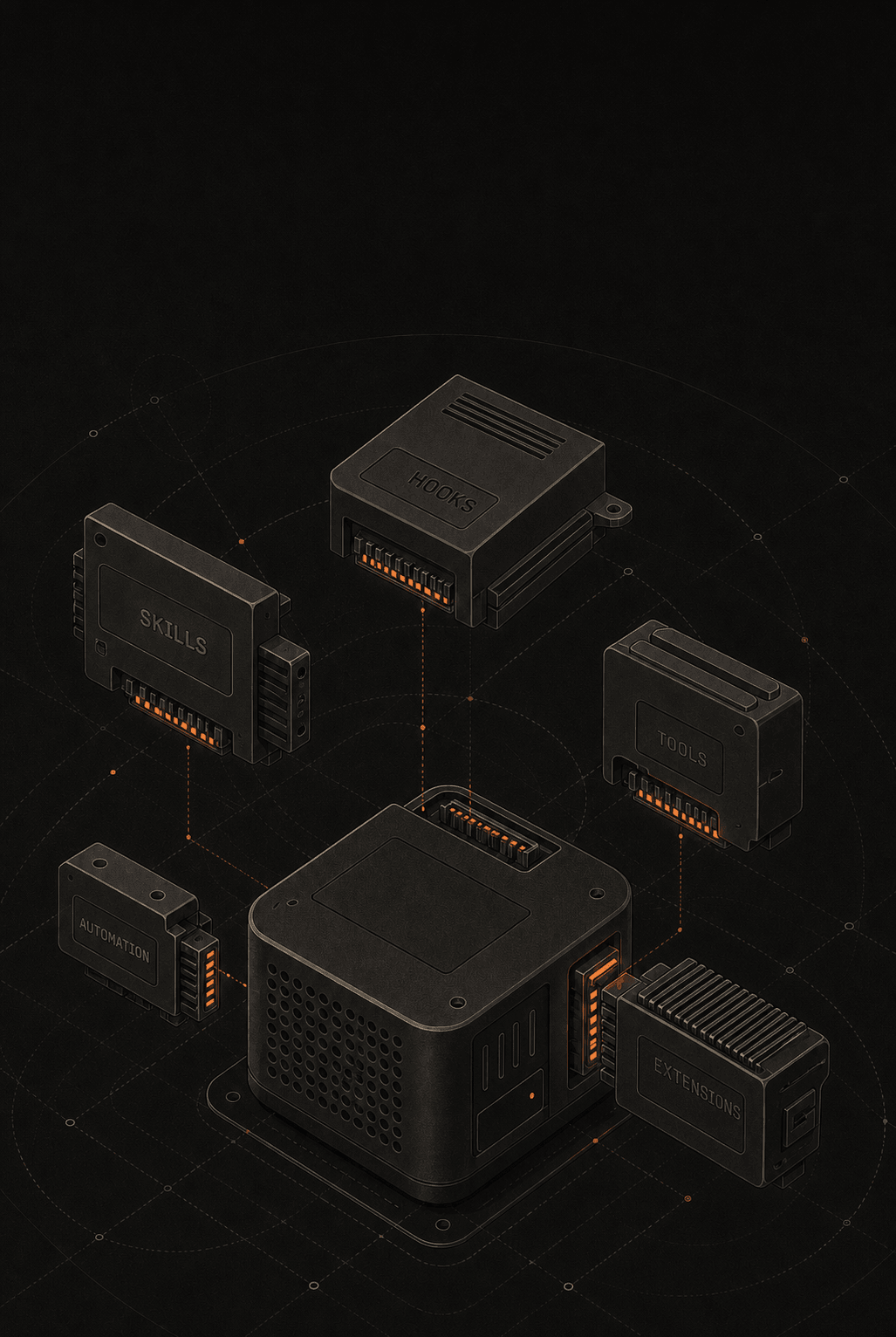
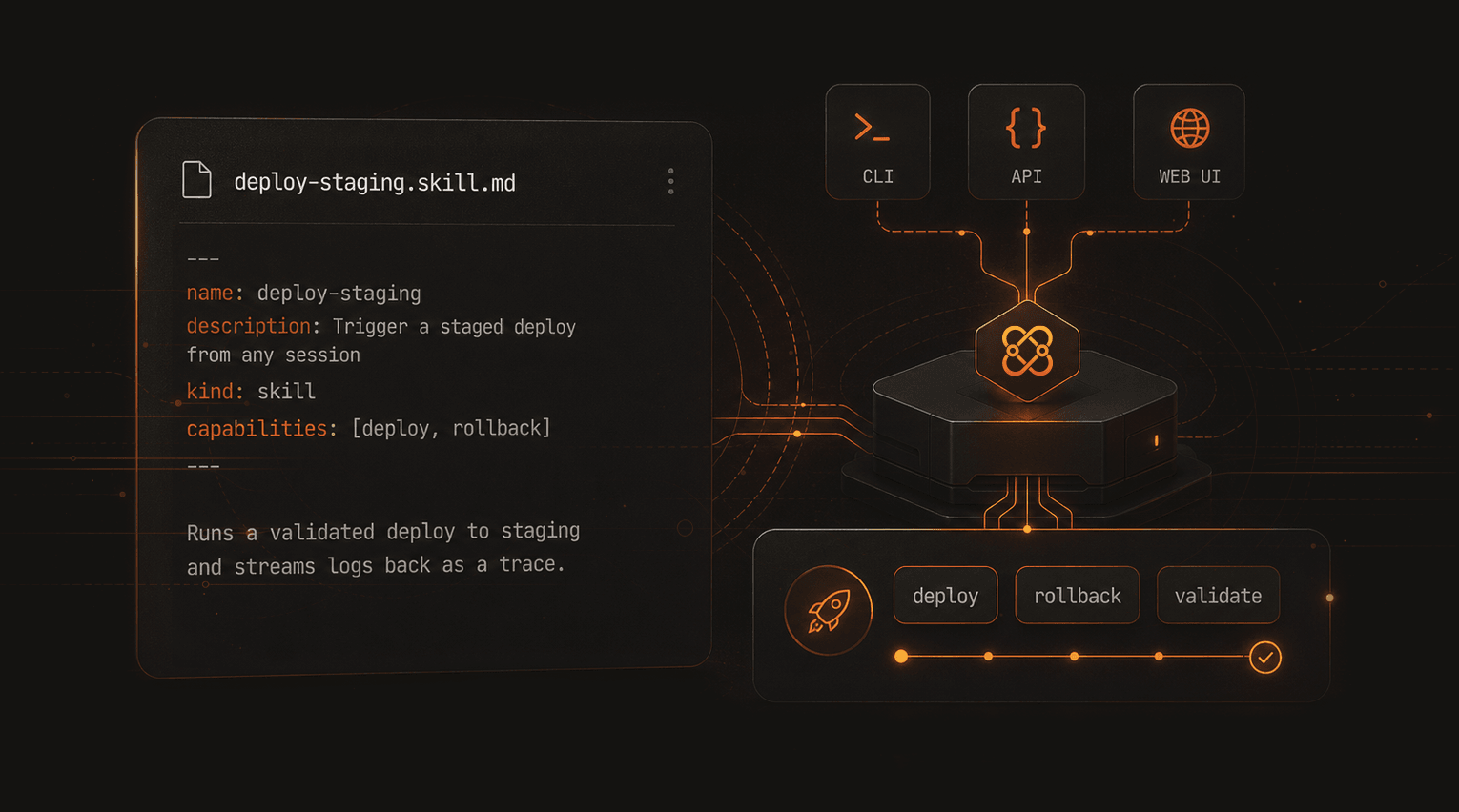
The daemon is extensible at every seam you actually need. No plugins to write; contracts are plain files.
Not an event bus. Typed lifecycle hooks fire at the call site that owns the transition: session, prompt, tool, permission, autonomy. Hooks can deny or narrow, never bypass.
hooks catalogShare reusable instruction sets with YAML frontmatter and Markdown body. Bundled defaults + global + workspace scopes.
skills guideDurable jobs and triggers the daemon owns. Schedule work. Start sessions. Track runs.
automationExtensions bundle skills, hooks, tools, and MCP servers. Ship them as zip files or via a GitHub registry.
extensionsHooks, skills, automation, extensions: schemas, CLI verbs, examples.
Read extensions docsA hook is a TOML block in your config. Everything the daemon loads is inspectable with compozy skill view, compozy hooks list, and compozy extension list.
CompozyOS launches built-in CLI and provider integrations as durable sessions, with shared tools, explicit permissions, and history that stays on your machine.
Read more about providersUse the verified installer on macOS or Linux, npm, or the pinned Go release; Homebrew users run brew install compozy/compozy/compozy. Today's experience is technical: a terminal, a local daemon, and one config file. Built for developers and technical operators.
$ curl -fsSL https://compozy.com/install.sh | sh$ npm install -g @compozy/cli$ go install github.com/compozy/compozy@v0.3.0-beta.5One local process, detached by default, exposing CLI, HTTP/SSE, and the web UI.
$ compozy daemon startRun from the repository you want to manage. CompozyOS infers and registers the workspace from your current directory.
$ compozy session new --agent general --name first-runGetting continuous work out of agents means wiring loops, triggers, cron, permissions, approvals, and observability, then maintaining the glue between them. In CompozyOS those are core objects in one runtime.
Retry scripts, watch loops, and ad-hoc guardrails rewritten per project.
Loops are core objects with typed guardrails and durable runs.
Cron jobs, webhook endpoints, and the glue that connects them to agents.
Automation the daemon owns: cron, webhooks, and event triggers.
Permission wrappers and approval prompts enforced only by convention.
Permissions and approvals enforced in the runtime, not in the prompt.
Log scraping and ad-hoc dashboards bolted around each run.
Durable events and run history from the records the runtime already writes.
Per-provider adapters and startup scripts for every CLI.
Runs the agents you already use: Claude Code, Codex, and Cursor among them.
One complete environment, batteries included: loops, triggers, permissions, approvals, and history. No scripts or orchestration frameworks to maintain.